Recent studies suggest that up to 87% of women are unaware that menopause can directly affect their teeth and gums. At Gentle Dental Care, we believe that empowering our patients with knowledge is the first step toward lifelong oral health.
In this guide, we’ll explore how estrogen affects your smile and what you can do to protect your oral health during perimenopause and beyond.
More Than Just Hot Flashes: Understanding Menopause and Oral Health
Estrogen isn’t just a reproductive hormone; it plays a vital role in maintaining the health of the mucous membranes in your mouth and preserving the density of your jawbone.
When estrogen levels drop during perimenopause and menopause, the tissues in the mouth can become thinner and less resilient. This makes you more susceptible to inflammation and infection. Understanding this link is crucial for early intervention and prevention.
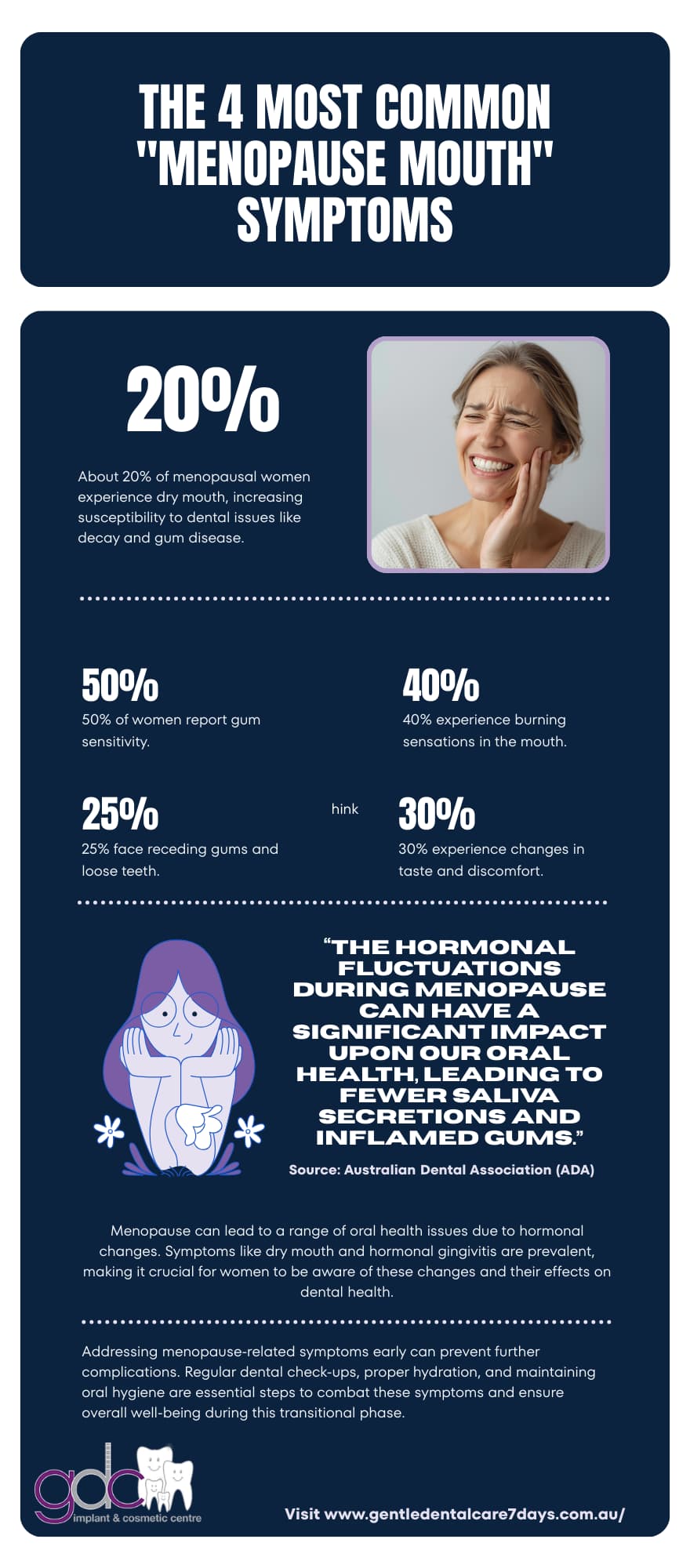
The 4 Most Common “Menopause Mouth” Symptoms
Dry Mouth (Xerostomia)
Lower estrogen levels lead to decreased saliva production. Saliva is your mouth’s natural defence mechanism; it neutralises acids and washes away food particles. Without adequate saliva flow, the risk of tooth decay, gum disease, and persistent bad breath increases significantly.
Hormonal Gingivitis
You might notice your gums becoming red, swollen, or bleeding more easily during flossing, even if your hygiene routine hasn’t changed. This is often “hormonal gingivitis.” A drop in hormone levels makes gum tissue more sensitive to bacteria in plaque, leading to increased inflammation.
Burning Mouth Syndrome
Have you ever felt a sensation similar to “scalding” your tongue or the roof of your mouth with hot coffee, but without the heat? This is known as Burning Mouth Syndrome. It is a common yet frequently misunderstood symptom of menopause that can cause significant discomfort and alter your sense of taste.
Bone Density & Gum Recession
Menopause is closely linked to a decline in bone density (osteoporosis). This affects the jawbone, which supports your teeth. When jawbone density decreases, it can lead to receding gums or even loose teeth. Early detection is key to preventing long-term structural damage.
Protective Steps You Can Take
While these changes are a natural part of aging, they are not inevitable. You can take proactive steps to protect your smile:
- Hydration & Saliva Stimulants: Drink plenty of water throughout the day. If you struggle with dry mouth, try using Xylitol-based sugar-free gum or lozenges to stimulate saliva flow.
- Nutrition for Bone Health: Ensure your diet is rich in Calcium and Vitamin D. These are essential for maintaining the strength of your jawbone and supporting the attachment of your teeth.
- Collaborative Care: Don’t be afraid to mention your life stage to your dentist. Menopause is a clinical health transition, and by sharing this information, we can create a tailored preventive plan that addresses your specific needs.

The Gentle Dental Commitment
At Gentle Dental Care, we provide a safe, judgment-free, and empathetic space to discuss the changes your body is going through. We understand that menopause can feel overwhelming, and your dental health shouldn’t be an added source of stress.
Our routine dental checkups and cleans include specialised screenings for hormonal impacts. Whether it’s managing dry mouth or monitoring bone density, our experienced team is here to support you through every stage of life.
Is it time for your checkup? Don’t let hormonal changes affect your confidence. Book an appointment with us today, and let’s keep your smile healthy and bright.
7 convenient Sydney locations with select clinics open 7 days.
Disclaimer: This blog post is intended for informational purposes only and does not substitute professional medical or dental advice. Always seek the advice of your dentist or other qualified health provider with any questions you may have regarding a medical condition.